Salon • Best Practice
Salon Education: The Complete Guide
Salon Education: The Complete Guide
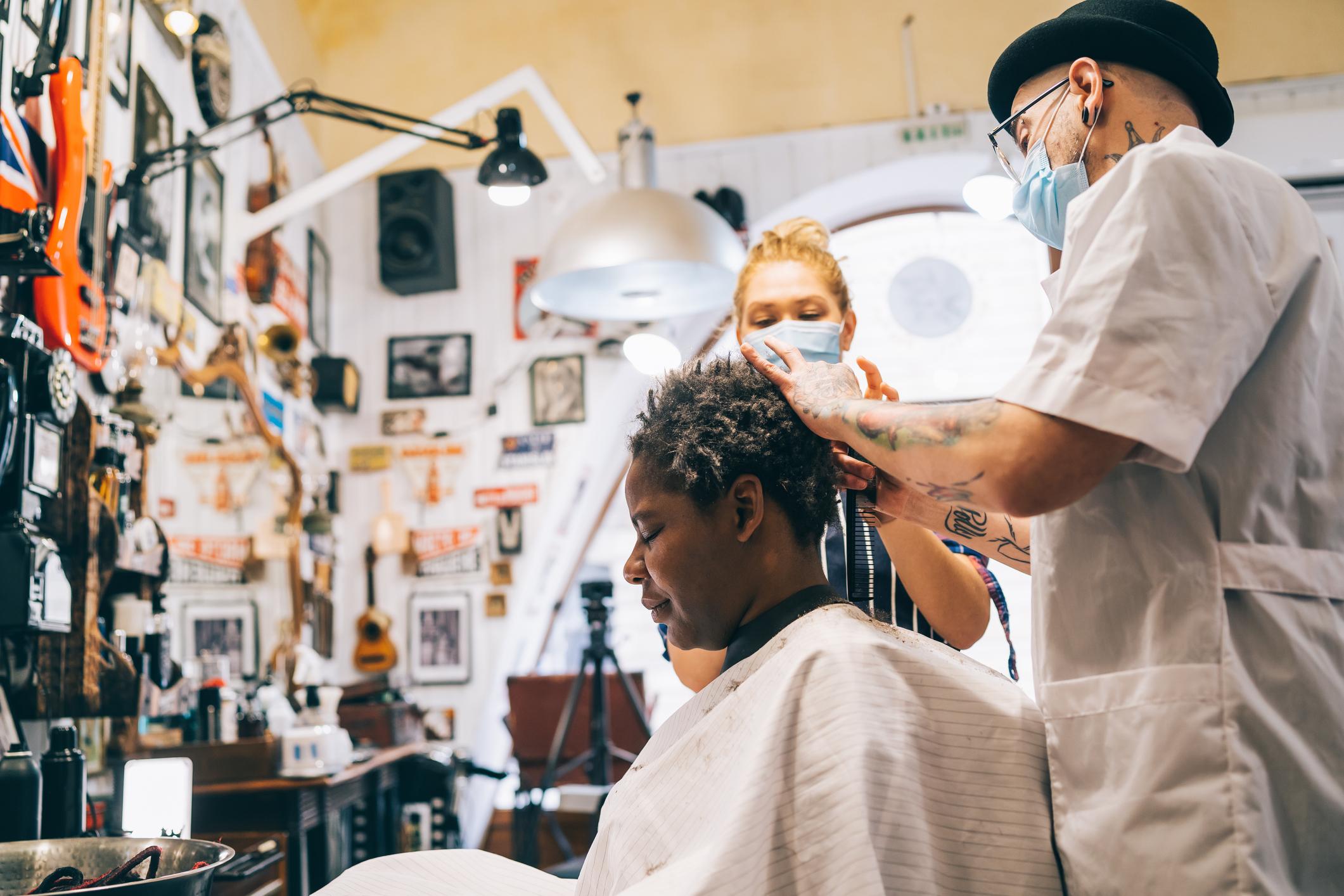
Wherever you are in your cosmetology journey, there’s always something to learn. Here are the resources you need at every level of the beauty biz.
Life-long learning plays an important role in virtually every corner of the beauty industry, from the very beginning to the very end of your career. Sure, regulations demand a certain amount of education before you can become a stylist, and others require even further training to keep your license once you’ve got it. But beyond those imposed standards, keeping your mind fresh and your tools sharp is always a good idea if you want to get ahead. Here’s everything beauty professionals need to know about salon education. This salon education guide covers everything from hair stylist apprenticeship programs to licensing, continuing education, and beyond.
How to become a hair stylist assistant
A hair stylist apprenticeship or assistant role is often the first real step in your salon education journey, giving you hands-on experience before going solo. Salon assistants are all-around team players. Because the goal of the job is to make stylists’ lives easier, assistants can end up with a wide-ranging list of responsibilities. That’s also one of the benefits of the job; you get to try a little bit of everything and get up close and personal with all the moving parts of a salon. Get ready to:
Welcome clients and work reception
Shampoo and dry hair
Mix and rinse color treatments
Sanitize equipment and sweep floors
Clean surfaces and wash towels
Or any other task that helps the salon run smoothly.
There are some prerequisites to becoming a hairstylist assistant, though — first and foremost, you need to be a licensed cosmetologist. That means graduating from an accredited educational institution, like a beauty school, college, or specialized trade program, followed by the licensing exam, which includes oral and written portions and a set number of dedicated training hours.
The only exception to that rule is the shampoo assistant — as a shampoo assistant, you can legally perform your (very specific) job duties without a cosmetology license. Then there’s a beauty school loophole: the apprenticeship. Some states allow aspiring beauty professionals to complete on-the-job apprenticeship hours instead of attending an accredited cosmetology program (but you’ll still need to put those hours toward sitting for the licensing exam if you want to be a fully fledged salon assistant or stylist).
Once you’ve completed your studies or your apprenticeship and earned your license, the last step is finding a job as a hair stylist assistant! Even if you don’t have any job experience yet, make sure to share your life skills, professional aspirations, and positive attitude with your potential employer.
If you want to learn more about becoming this backbone of salon life, read our full post: “Want to Be a Hair Stylist Assistant? Get the Low-Down Here.”
5 steps to start your cosmetology apprenticeship program
Whether you pursue a cosmetology apprenticeship program or a traditional beauty school route, these five steps apply to every path into the industry. Becoming a hairstylist isn’t easy, but all that effort can result in an extremely rewarding career. It can take up to two years or more to go from total beginner to working stylist, but some people complete the journey in as little as six months. Here are the five steps that will take you from student to stylist.
#1: Go to beauty school
Hair education is serious business. Just like salon assistants, stylists need to graduate from state-recognized cosmetology programs. There are a ton of educational tracks you can choose from, so make sure to find a program that works for you. You can take classes in person or online, stay close to home, or study where you dream of working. The cost of beauty school will range greatly depending on variables like these, but so will the opportunities you’re presented with post-graduation.
#2: Get your hours in
Every state requires a different number of training hours before you can receive your cosmetology license. You can expect to rack up between 1,000-1,500 hours of training time depending on where you’re located. It may seem like a big commitment, but investing that time up front helps ensure you’ll be ready to take good care of clients straight out of the gate whenever you get your first salon job.
It’s a good idea to check the hours requirement where you live. Here’s a handy state-by-state rundown: “Cosmetology License Requirements by State (Stylists: Bookmark This!).”
#3: Pass the license exam
In the same way that each state has its own hours minimums, each state also runs its own licensing exam. The written portion of the exam is pretty standard, but some states also require oral and practical portions of the exam. You can check with your local licensing board so the test doesn’t take you by surprise, and then when exam time comes around, take a few deep breaths and show ‘em what you know.
#4: Score a styling job
There’s no one right way to be a professional hair stylist. Some people become a part-time or full-time salon employee, while others prefer to go out on their own and run their own business. Whether you join a salon team, start your own salon, or rent a chair, it’s a good idea to stop and consider where your strengths lie and how you want to grow your career as a stylist over the course of your life.
#5: Keep on learning
Things change fast in the hair world. Keep up with emerging trends, learn new techniques, and keep your skills sharp by taking styling classes throughout your career. Staying invested in your hair stylist education and training is always a good idea. Stay engaged to keep yourself at the forefront of the business and grow your professional caché instead of lagging behind — or worse, getting rusty.
Ready to start your journey toward becoming a stylist? Read our article on “How to Become a Hair Stylist in 5 Not-So-Easy (But Profoundly Rewarding) Steps.”
Continuing your cosmetology education after licensing
Taking an “always be learning” approach to your cosmetology career isn’t just a nice idea — in certain states, it’s also a requirement. In the same way that you have to renew your driver’s license at the DMV, you also need to keep your cosmetology license up to date. Some states require licensed stylists to keep a log of continuing education units to prove that you’re putting in the hours to keep yourself in tip top styling shape.
Like with so many other things in the world of cosmetology, you’ll need to check with your local state licensing board to find out if there are any continuing education requirements. In some states, there are even special stipulations about how you can spread your continuing education units across training categories like health and safety, legal requirements, professional skills, trade shows, and one-on-one mentorship. Depending on where you’re located, you might need to complete between four and 30 continuing education units within each renewal period (which can last for one, two, or three years).
Look up your state’s regulations and keep brushing up your skills with our full post: “Cosmetology Continuing Education Classes - Your Guide to Sharpening the Shears.”
Must-attend hair shows and beauty events in 2026
Some people like to hit cosmetology cons and trade shows to rack up valuable hair education hours that count as continuing education units. Others attend beauty industry events for benefits like networking, finding products and tools, or uncovering new work opportunities. Whatever your motivation may be, these are some of the most important industry shows you can (and probably should) attend this year.
1. America's Beauty Show (April 18–20, 2026) at the Donald E. Stephens Convention Center. The largest nonprofit beauty show in America with 300+ classes and 40+ hours of CEU education.
2. Be+Well Beauty and Wellness Show (New York) (March 8–10, 2026). The reimagined International Beauty Show now united with IECSC, featuring 500+ exhibitors and hands-on workshops for hair, spa, and wellness professionals.
3. Premiere Anaheim (February 1–2, 2026) at the Anaheim Convention Center, featuring 120+ exhibiting brands and 180+ educational classes for beauty professionals and students.
See how Boulevard helps salon owners support their team's education and growth with the right tools.
FAQs
What is salon education?
Salon education refers to the full range of training and professional development available to beauty industry professionals — from cosmetology school and licensing requirements to continuing education, hair shows, and advanced technique classes. It covers both the foundational education needed to enter the industry and the ongoing learning that helps stylists and salon owners stay competitive throughout their careers.
What is a cosmetology apprenticeship program?
A cosmetology apprenticeship program is an alternative path to licensure that allows aspiring beauty professionals to complete their required training hours on the job rather than in a traditional beauty school setting. Some states allow apprenticeship hours to count toward the licensing exam, making it a practical option for those who prefer hands-on learning from the start.
How long does a cosmetology apprenticeship take?
The length of a cosmetology apprenticeship depends on your state's licensing requirements and the number of hours required before you can sit for the exam. Most states require between 1,000 and 1,500 hours of supervised training. At a full-time pace this can take anywhere from one to two years, though part-time arrangements may take longer.
What is the difference between beauty school and a hair stylist apprenticeship?
Beauty school is a structured, accredited program where students complete classroom instruction and hands-on training in a school setting before taking the licensing exam. A hair stylist apprenticeship allows you to complete your required hours working directly in a salon under the supervision of a licensed professional. Both paths lead to licensure, but apprenticeships offer more real-world experience from day one while beauty school provides a broader theoretical foundation.
What does cosmetology education include?
Cosmetology education covers a wide range of skills including hair cutting, coloring, chemical treatments, skin care, nail services, and sanitation practices. It also includes business fundamentals like client communication, salon operations, and retail sales. After completing an accredited program and passing the state licensing exam, cosmetologists can pursue continuing education to specialize in areas like color, texture, or advanced styling techniques.
Boulevard was built to help your business achieve profitability at scale without losing an inch of sanity. See for yourself! Get a free demo today.


Shanalie Wijesinghe
Content Strategy Director
Shanalie Wijesinghe is the Content Strategy Director at Boulevard. She lends her industry and platform expertise to both in-house staff and partner salons and spas. A salon industry veteran with more than 15 years of experience working for high-end luxury salons such as Sally Hershberger and BENJAMIN, Shanalie was previously Director of Education for Boulevard and blends her knowledge of the beauty and technology industries to help put the company’s partners and employees on the path to success. A Bay Area native and first-generation immigrant, Shanalie is a graduate of the Paul Mitchell School specializing in cosmetology, styling, and nail instruction.
Related Posts

Want to Be a Hair Stylist Assistant? Get the Low-Down Here
Here’s everything you need to know about getting a job as a hair stylist assistant and building a career for yourself in the beauty world.
Read Article
Cosmetology Continuing Education Classes - Your Guide to Sharpening the Shears
Find your state’s requirements for cosmetology continuing education classes and how to keep developing your professional skills.
Read Article
How to Become a Hair Stylist in 5 Not-So-Easy (But Profoundly Rewarding) Steps
In order to become a hair stylist, you must go to school, go through training, get your license, and more. Here are the steps for how to do it.
Read Article
Hair Stylist Job Description: Template, Duties, and Skills
Boulevard's hair stylist job description guide and template covers everything salon owners need to include in a post to attract top talent.
Read ArticleMassage Therapy Certification: Requirements and Pathways
Boulevard breaks down massage therapy certification requirements, license types, and training so practitioners can launch their careers with confidence.
Read Article
The Evolving Role of Technology in Salon Education
Tech has opened up salon education to the masses and gives you back more time to spend with your staff. Discover how inside.
Read Article
Cosmetology License Requirements by State (Stylists: Bookmark This!)
Learn what your state requires to become a licensed cosmetologist, barber, nail technician, esthetician, instructor, and more.
Read Article
How to Be a Good Salon Manager: 6 Tips to Master the Trade
Want to know how to be a good salon manager? It isn’t about being a better stylist, but a better leader for your team.
Read Article
Managers as Mentors: Reinventing the Salon Management Paradigm
Many beauty businesses are struggling to keep their staff. Learn how a new approach to manager-staff relationships can boost employee retention rates.
Read ArticleSign up for weekly blog updates.